The latest writings from our team
The latest industry news, interviews, technologies, and resources.

The latest industry news, interviews, technologies, and resources.
A missed call is not a voicemail. It is a customer already dialling the next number. What to do in the ninety seconds after they hang up.
 Arafat Ul Shezan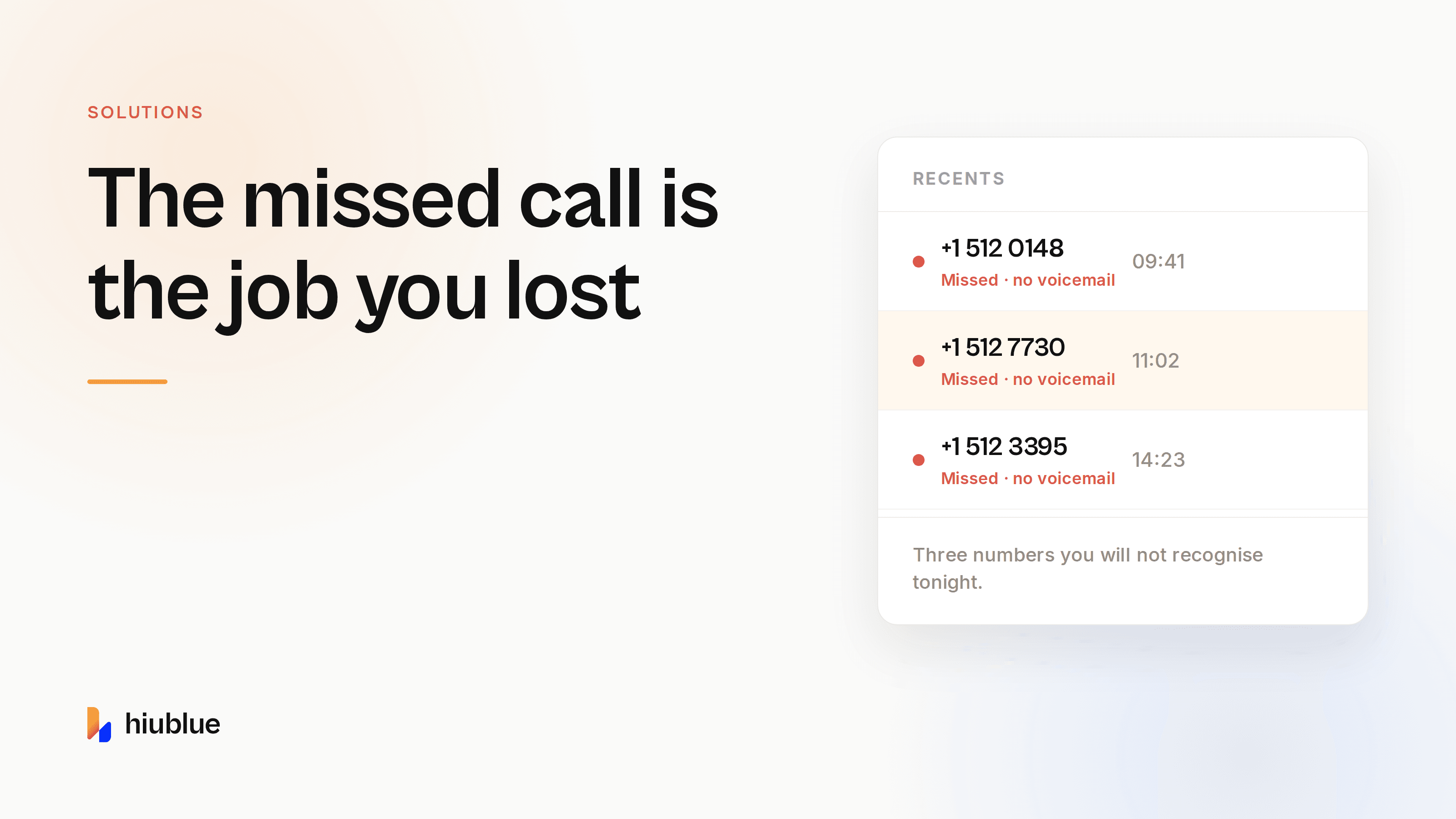
The missed call is the job you lost
You are on a roof. The phone rings in the van. By the time you get down it has stopped, there is no voicemail, and the number means nothing to you. You will call it back this evening if you remember.
They are not waiting for this evening. They are already on the third result in the search that found you.
We still talk about missed calls as though the caller leaves a message and waits. Most people under forty will not leave a voicemail at all. They hang up and press the next listing. The call you missed left no trace except a number in a log, and that number is indistinguishable from a wrong number, a supplier, or a robocall.
So the loss is invisible. You never find out what it was. Nothing in your accounts shows a gap, because the job never existed on paper. That is what makes this the most expensive problem most trades businesses never look at.
This is the part worth being precise about, because it is where the whole thing is decided.
They hang up. They are still holding the phone. They are still in the same frame of mind that made them call in the first place, which is usually mild urgency and mild irritation. For roughly the next minute or two, they have not yet committed to anyone else.
If something arrives in that window, you are still in the running. If nothing arrives, the next company they reach becomes the default, and you are competing against someone who already answered.
You do not need to win the call. You need to not disappear.
An automatic text after a missed call is not a clever growth tactic. It is the minimum civility of being a business with a phone number. It works because it lands inside that window, and because a text does not require them to do anything awkward.
What it says matters more than people think.
Bad: "Sorry we missed your call! We will get back to you as soon as possible." This is a shrug. It gives them nothing to do and no reason to wait.
Better: name yourself, say when, and ask one thing. "This is Dan at Harbor line Plumbing, sorry, I am on a job until four. What is the issue and which area are you in? I will call you straight back."
Three things happened there. They know it is a real business and not a spam number. They know a specific time, so waiting has a defined end. And they have a question they can answer with one thumb, which keeps the conversation alive without costing them anything.
Most people reply. That reply is the job.
The text buys you time. It does not close anything. The failure mode here is a business that sets up an auto text, feels covered, and then never actually calls back, so every caller gets a polite acknowledgement and silence. That is worse than missing the call outright, because now you have also promised something.
The text and the callback are one system. If you cannot guarantee the second half, the first half is a liability.
This is where having something that owns the thread helps. A worker with its own number sends the text, reads the reply, and either books them in or hands you a conversation that already has the address, the problem and the urgency in it. What you pick up at four is not a callback from cold. It is a job that is most of the way to scheduled.
Some people will not reply to the text. Do not assume they are gone.
A single follow up the next morning, referring to the specific thing they called about, recovers a meaningful share of them. Not a sequence. Not five touches over two weeks. One, specific, and then you leave them alone. The ones who went with someone else will not respond and that is fine. The ones who got busy and forgot will often come straight back.
The discipline is stopping after one. Follow up is recovery, not pressure, and the difference is whether you stop when they do not answer.
Before you build anything, open your call log and count the missed calls from the last two weeks that you never returned. Just count them.
Multiply by your average job value. That is the number. It is usually bigger than people expect, and it is usually the cheapest thing on the list to fix.
Do missed call text back messages actually work?Yes, when they arrive within a minute or two and say something specific. The gain comes almost entirely from speed and from sounding like a person. A generic apology text sent ten minutes later does very little.
What should a missed call text say?Your name and business, why you could not answer, when you will call back, and one short question they can answer quickly. Four elements, two sentences.
Is it rude to text someone who called?No. A text is lower pressure than a callback they have to take. Most callers prefer it, particularly if they are at work themselves.
How many times should I follow up if they do not reply?Once, the next morning, referencing what they called about. Then stop. Repeated chasing on an unreturned call converts poorly and damages how your number is treated.
What if I get a lot of spam calls?Then the text pays for itself twice, because a real customer replies and a robocall does not. Your log stops being a wall of anonymous numbers and starts sorting itself.
Book a demo and we will set this up against your real number, with a worker named after your team.